
Understanding the Standards for Wildlife Rehabilitation
Wildlife rehabilitation is a critical field dedicated to the care and recovery of injured, orphaned, or sick wild animals. To ensure the highest quality of care, the National Wildlife Rehabilitators Association (NWRA) and the International Wildlife Rehabilitation Council (IWRC) have established comprehensive guidelines known as the Standards for Wildlife Rehabilitation.
These standards serve as a benchmark for rehabilitators across the nation, emphasizing professionalism, ethical conduct, and the well-being of wildlife. Key components include:
- Professional Standards and Guidelines: Detailed protocols for the appropriate care and housing of wildlife, ensuring their health and welfare during rehabilitation.
- Health and Welfare Recommendations: Best practices for disease prevention, medical treatment, and overall animal care.
- Evaluation for Release: Criteria for assessing when an animal is ready to be released back into the wild, ensuring they are healthy and capable of surviving on their own.
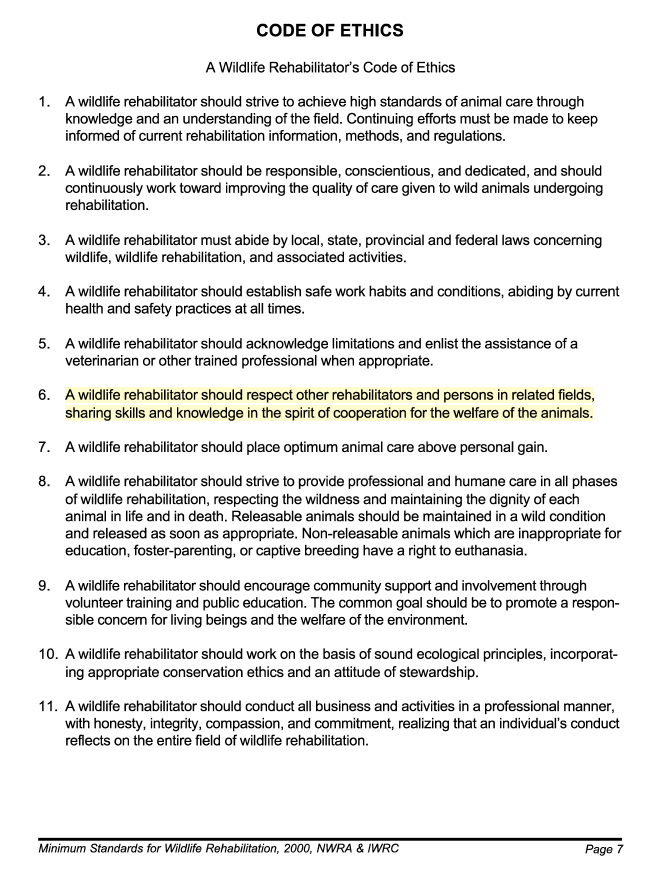
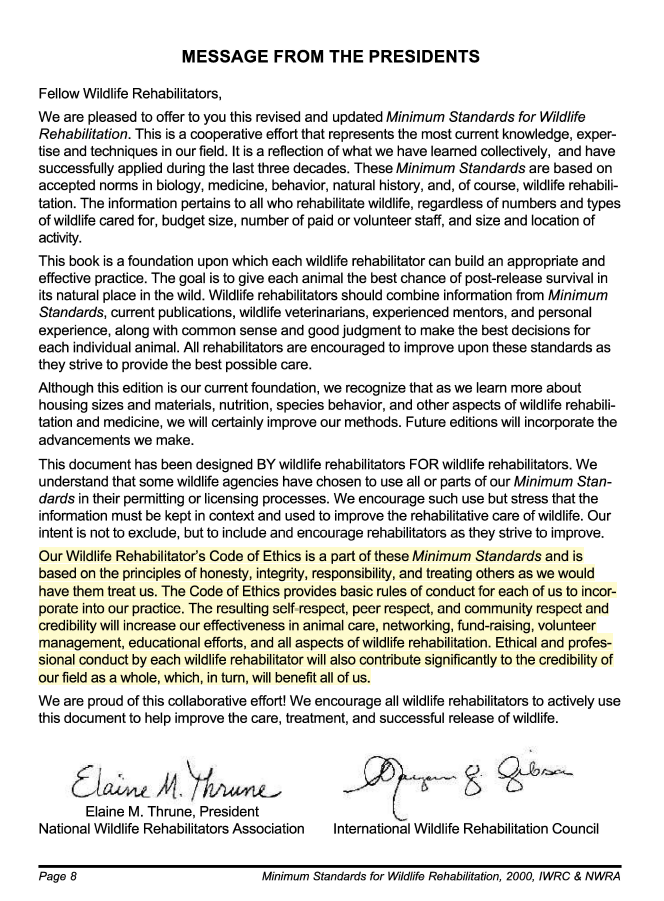
- Ethical Conduct: A code of ethics that promotes respect for wildlife, collaboration among rehabilitators, and continuous education to stay informed about the latest rehabilitation techniques and regulations.
By adhering to these standards, wildlife rehabilitators can provide the best possible care for animals in need, ultimately contributing to the conservation and protection of wildlife populations.
Squirrel Friends Wildlife Rescue believes in bringing unity to the wildlife rehabilitation community. We adopt and adhere to the Code of Ethics as described in the Minimum Standards for Wildlife Rehabilition.
Below are excerpts from pages 7 and 8 of the Wildlife Rehabilitator’s Code of Ethics. This code, which applies to all rehabilitators nationwide, emphasizes professionalism and respect within our community.
“Coming together is a beginning, staying together is progress, and working together is success.” – Henry Ford

 Squirrel Friends Wildlife Rescue